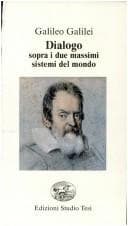
Dialogo sopra i due massimi sistemi del mondo
Galileo Galilei · 1632
Banned in 1 country
About this book
Galileo's Dialogue Concerning the Two Chief World Systems, published in Florence in 1632, was the most proximate cause of his being brought to trial before the Inquisition. Using the dialogue form, a genre common in classical philosophical works, Galileo masterfully demonstrates the truth of the Copernicancan system over the Ptolemaic one, proving, for the first time, that the earth revolves around the Sun. It's influence is incalculable. The Dialogue is not only one of the most important scientific treatises ever written, but a work of supreme clarity and accessibility, remaining as readable now as when it was first published. This edition uses the definitive text established by the University of California Press, in Stillman Drake's translation, and includes a Foreword by Albert Einstein and a new Introduction by J.L. Heilbron.
Why it was banned
Galileo's Dialogue Concerning the Two Chief World Systems was condemned by the Roman Inquisition and placed on the Index Librorum Prohibitorum in 1633. The Church held that Galileo had violated the 1616 injunction not to advocate for Copernican heliocentrism. He was tried by the Inquisition, forced to recant, and placed under house arrest for the remainder of his life. The book remained on the Index until 1835 — more than 150 years after his death.
Censorship history
Galileo's "Dialogue Concerning the Two Chief World Systems" was condemned by the Roman Inquisition in 1633, leading to Galileo's trial for heresy and his forced recantation. The book was placed on the Index of Forbidden Books and remained banned by the Vatican until it was lifted in 1835. This case exemplifies the tension between scientific inquiry and religious doctrine during the early 17th century, marking a significant moment in the history of censorship.
Bans
| Country | Year | Reasons | ||
|---|---|---|---|---|
| Vatican City (Holy See) | 1633lifted | BlasphemyReligious | ||
| Condemned by the Roman Inquisition in 1633; Galileo tried, forced to recant, and placed under house arrest. On the Index until 1835. One of the most iconic cases of conflict between science and religious authority. | ||||