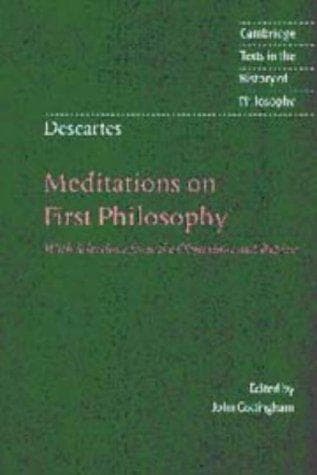
About this book
"Meditationes de prima philosophia" explores foundational questions of existence, knowledge, and the nature of reality. In this philosophical work, René Descartes employs a method of doubt to strip away uncertainties, ultimately arriving at the famous conclusion "Cogito, ergo sum" (I think, therefore I am). The text delves into the existence of God, the distinction between mind and body, and the reliability of human perception. Through a series of meditations, Descartes seeks to establish a secure foundation for scientific knowledge and rational thought.
Why it was banned
Descartes' Meditations on First Philosophy was placed on the Index Librorum Prohibitorum in 1663, more than a decade after his death. The Church objected to his systematic methodological doubt and his rationalist approach to metaphysics, which appeared to derive the existence of God through reason alone rather than Scripture or tradition. Descartes had sought ecclesiastical approval during his lifetime; it was denied posthumously. The work remained on the Index until 1966.
Censorship history
In 1663, "Meditationes de prima philosophia" was added to the Index Librorum Prohibitorum by the Vatican, reflecting the Church's condemnation of Cartesian rationalism, which it viewed as a challenge to scholastic philosophy and scriptural authority. This ban remained in effect until the Index was abolished in 1966, indicating a long-standing conflict between emerging modern philosophical thought and traditional religious doctrine. The work's implications regarding the nature of existence and the reliability of human perception were particularly contentious during a time when the Church sought to maintain control over intellectual discourse.
Bans
| Country | Year | Reasons | ||
|---|---|---|---|---|
| Vatican City (Holy See) | 1663lifted | Religious | ||
| Added to the Index posthumously in 1663. Church objected to Cartesian rationalism and its implicit challenge to scholastic philosophy and scriptural authority. On the Index until abolition in 1966. | ||||