China
China operates one of the world's most extensive censorship apparatuses, overseen by the General Administration of Press and Publication and reinforced by party directives and the Great Firewall. Works that challenge Communist Party authority, document suppressed historical events — the Great Leap Forward famine, the Cultural Revolution, the Tiananmen Square massacre — or support Tibetan or Uyghur cultural identity are systematically banned. Chinese-language editions of banned books circulate in Hong Kong and Taiwan; foreign editions are confiscated at customs. Nobel Peace Prize laureate Liu Xiaobo's writings remain banned in mainland China, where even his name is censored online.
Bans by year
Banned books
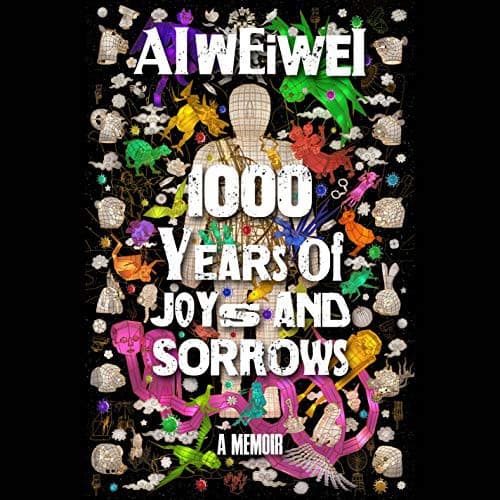
1000 Years of Joys and Sorrows
Ai Weiwei
Ai Weiwei's sweeping memoir weaves together his father's story — poet Ai Qing, denounced in the Anti-Rightist Campaign and sent for twenty years of forced labor — with his own rise as China's most famous dissident artist, his 2011 secret detention by the Chinese state, and his subsequent exile. Predictably unavailable in China.
Government / national · 2021
1984
George Orwell
Nineteen Eighty-Four: A Novel, often referred to as 1984, is a dystopian social science fiction novel by the English novelist George Orwell (the pen name of Eric Arthur Blair). It was published on 8 June 1949 by Secker & Warburg as Orwell's ninth and final book completed in his lifetime. Thematically, Nineteen Eighty-Four centres on the consequences of totalitarianism, mass surveillance, and repressive regimentation of persons and behaviours within society. Orwell, himself a democratic socialist
Government / national · 1985
Alice's Adventures in Wonderland
Lewis Carroll
Lewis Carroll's whimsical tale of a young girl who falls down a rabbit hole into a nonsensical world populated by talking animals and peculiar characters — the Queen of Hearts, the Cheshire Cat, the Mad Hatter. Written by Oxford mathematics lecturer Charles Dodgson for Alice Liddell, daughter of a colleague. Banned in China in the 1930s on the grounds that animals speaking on equal terms with humans was considered inappropriate; challenged in the US for various reasons throughout the 20th century.
Government / national · 1931 · lifted
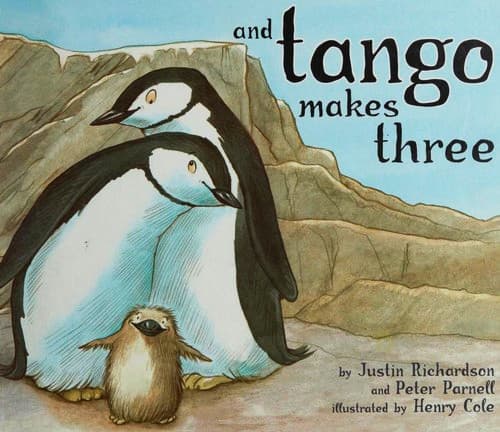
And Tango Makes Three
Justin Richardson, Peter Parnell
In the zoo there are all kinds of animal families. But Tango's family is not like any of the others. This illustrated children's book fictionalizes the true story of two male penguins who became partners and raised a penguin chick in the Central Park Zoo.
Government / national · 2016
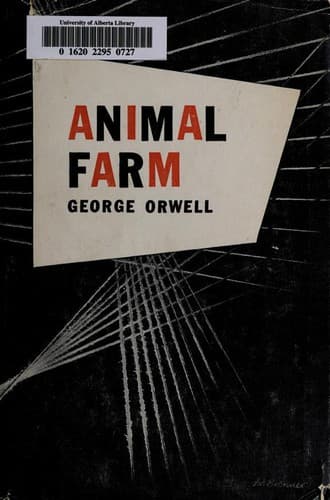
Animal Farm
George Orwell
Animal Farm is a brilliant political satire and a powerful and affecting story of revolutions and idealism, power and corruption. 'All animals are equal. But some animals are more equal than others.' Mr Jones of Manor Farm is so lazy and drunken that one day he forgets to feed his livestock. The ensuing rebellion under the leadership of the pigs Napoleon and Snowball leads to the animals taking over the farm. Vowing to eliminate the terrible inequities of the farmyard, the renamed Animal Farm is
Government / national · 1949
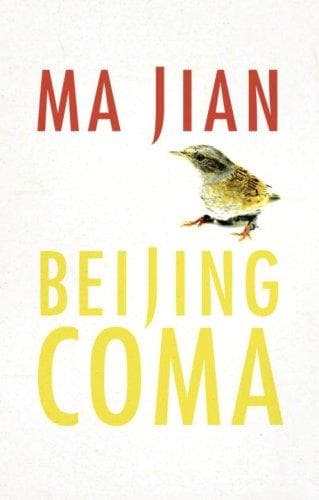
Beijing Coma
Ma Jian
Ma Jian's 2008 novel is narrated by a Tiananmen Square survivor who lies in a coma, reliving the 1989 protest movement while his mother tends to his unresponsive body. The internal memories reconstruct the weeks of occupation in forensic detail. The book is banned in China, where the events themselves are officially disappeared from history.
Government / national · 2008
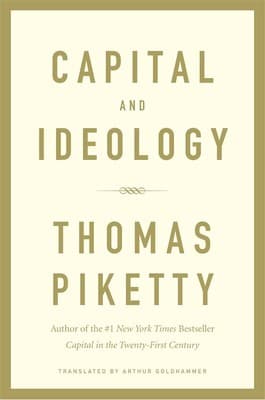
Capital and Ideology
Thomas Piketty
"Thomas Piketty's bestselling Capital in the Twenty-First Century galvanized global debate about inequality. In this audacious follow-up, Piketty challenges us to revolutionize how we think about politics, ideology, and history. He exposes the ideas that have sustained inequality for the past millennium, reveals why the shallow politics of right and left are failing us today, and outlines the structure of a fairer economic system. Our economy, Piketty observes, is not a natural fact. Markets, pr
Government / national · 2019
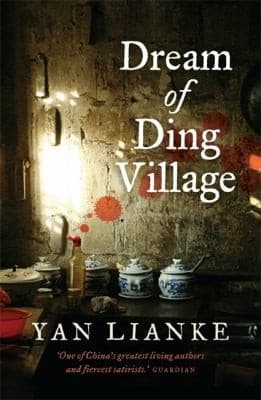
Dream of Ding Village
Yan Lianke
Yan Lianke's devastating 2005 novel about a rural Chinese village devastated by an AIDS epidemic spread through contaminated blood sales organized by local officials. Based on the real Henan blood scandal that infected hundreds of thousands, it was banned in China for its unflinching portrayal of official complicity and corruption.
Government / national · 2006
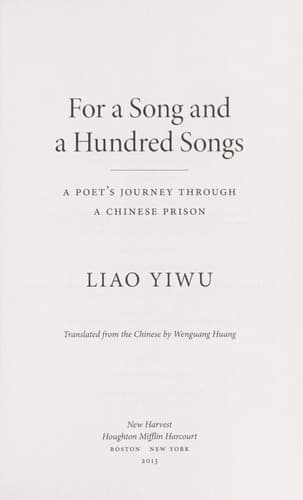
For a Song and a Hundred Songs
Liao Yiwu
Chinese poet and musician Liao Yiwu was sentenced to four years in prison for writing a poem mourning the victims of Tiananmen. This memoir records his prison years in unflinching detail — the torture, the fellow inmates, the performances that helped him survive — and ranks among the most important documents of life inside China's prison system.
Government / national · 1997
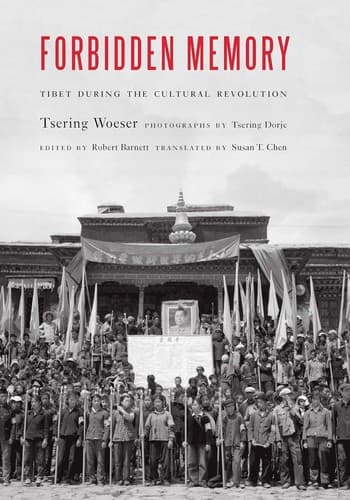
Forbidden Memory: Tibet During the Cultural Revolution
Tsering Woeser
Tibetan writer Tsering Woeser's 2006 book pairs her father's photographs from the Cultural Revolution in Tibet — taken while he served as a Chinese military officer — with her own commentary examining the destruction of Tibetan culture. Banned in China, it was published abroad and became a key document of the Cultural Revolution's impact on Tibet.
Government / national · 2006
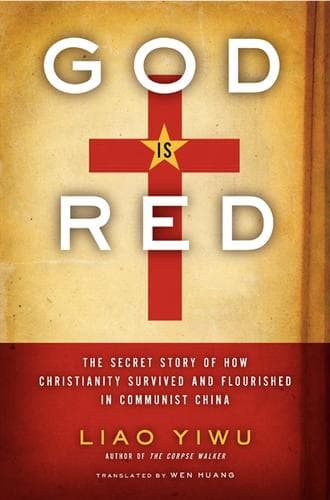
God Is Red
Liao Yiwu
Liao Yiwu's 2011 oral history documents the underground Christian church in China through interviews with believers who have survived persecution across multiple eras — land reform, the Cultural Revolution, and the crackdowns of the 1990s and 2000s. Liao escaped China in 2011 by crossing into Vietnam on foot; he has lived in Berlin since.
Government / national · 2011
Jane Eyre
Charlotte Brontë
"Created by Harvard students for students everywhere, SparkNotes give you just what you need to succeed in school."--Back jacket.
Government / national · 1966 · lifted
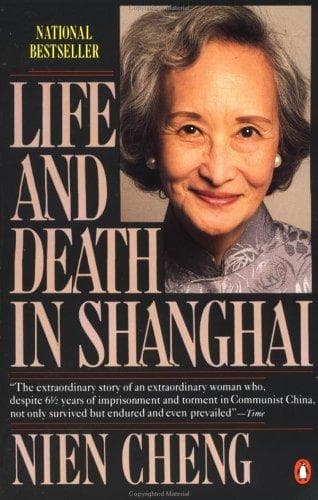
Life and Death in Shanghai
Nien Cheng
In August 1966 a group of Red Guards ransacked the home of Nien Cheng. Her background made her an obvious target for the fanatics of the Cultural Revolution: educated in London, the widow of an official of Chiang Kai-shek's regime, and an employee of Shell Oil, Nien Cheng enjoyed comforts that few of her compatriots could afford. When she refused to confess that any of this made her an enemy of the state, she was placed in solitary confinement, where she would remain for more than six years.
Government / national · 1987
Mao: The Unknown Story
Jung Chang
A biography of of Mao Zedong taken from the perspective of his relationship to women. The normal biographical elements make up the majority of the text but when there is an interesting aspect regarding Mao's attitude toward women, Jung Chang (a woman) goes for it. For example... any normal biography of Mao, would take account of the movements of Mao's army as he took control of China but it is interesting that his army camped outside the town where his wife and son lived (had been abandoned, fra
Government / national · 2005
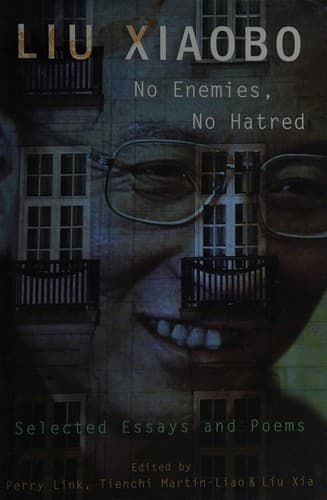
No Enemies, No Hatred
Liu Xiaobo
Liu Xiaobo's collected essays and poems, published abroad in 2012 while he was serving an eleven-year prison sentence for "inciting subversion." Co-author of Charter 08 — China's democracy manifesto — Liu was awarded the Nobel Peace Prize in 2010; his chair at the Oslo ceremony was left empty. He died in state custody in 2017, the first Nobel Peace laureate to die in government hands since Carl von Ossietzky under the Nazis.
Government / national · 2012
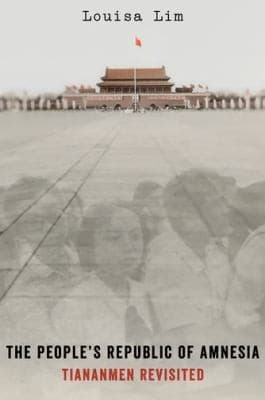
People's Republic of Amnesia
Louisa Lim
A reassessment of the Tiananmen Square massacre on its 25th anniversary, exploring how China has systematically suppressed all memory of the events of June 4, 1989. Former BBC Beijing correspondent Louisa Lim documents how an entire generation of young Chinese citizens — including students at the very university where protests began — have been rendered ignorant of the crackdown.
Government / national · 2014
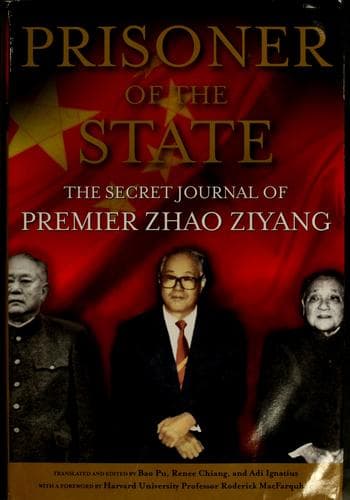
Prisoner of the State
Zhao Ziyang
Zhao Ziyang was General Secretary of the Chinese Communist Party who opposed the military crackdown on Tiananmen Square protesters in 1989; he was removed from office, placed under house arrest, and never appeared in public again until his death in 2005. These memoirs were smuggled out on cassette tapes hidden in ordinary-looking cases. Published in 2009, they remain banned in China.
Government / national · 2009
Prisoners of the State: The Inside Story of China's Secret System
Xu Zhiyong
Xu Zhiyong's account of China's "stability maintenance" apparatus — the vast system of petitions offices, black jails, and forced psychiatric commitment used to suppress dissidents and prevent complaints from reaching higher authorities. Xu, a legal scholar and co-founder of the New Citizens Movement, was imprisoned in 2014 and again in 2023, sentenced to fourteen years. The book is banned in China.
Government / national · 2009
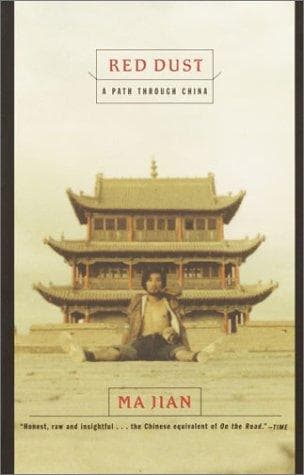
Red Dust
Ma Jian
Ma Jian's 1990 memoir of three years wandering through remote Tibet and China following his breakup with a woman and disillusionment with Beijing's cultural bureaucracy. Banned in China for its frank portrayal of rural poverty, official corruption, and Tibetan culture. Ma Jian, already under surveillance by the time he completed it, left China in 1987 before the book was published.
Government / national · 1987
Red Sorghum
Mo Yan
This file is missing one or two pages near the end of the book--the second- and maybe third-to-last page. Couldn't find anywhere else to make this note.
Government / national · 1993 · lifted
Serve the People!
Yan Lianke
Yan Lianke's 2005 novella — its title appropriates Mao's famous slogan — depicts a sexual affair between an officer's wife and his orderly in a Chinese military base during the Cultural Revolution, using Mao's writings as their pillow talk and burning a copy of the collected works during an argument. Banned in China within weeks of publication for its political and sexual content, it was published internationally to considerable acclaim.
Government / national · 2005
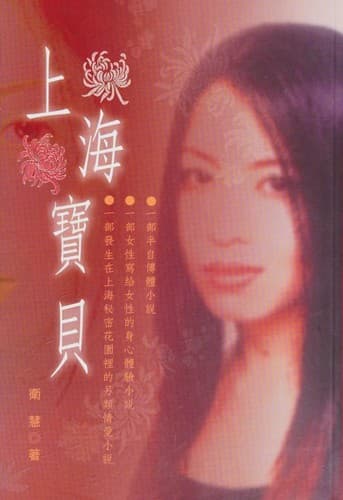
Shanghai Baby
Wei Hui
"Publicly burned in China for its sensual nature and irreverent style, this novel is the semi-autobiographical story of Coco, a cafe waitress, who is full of enthusiasm and impatience for life. She meets a young man, Tian Tian, for whom she feels tenderness and love, but he is reclusive, impotent and an increasing user of drugs. Despite parental objections, Coco moves in with him, leaves her job and throws herself into writing.". "Shortly afterwards she meets Mark, a married Westerner. The two
Government / national · 2000 · lifted
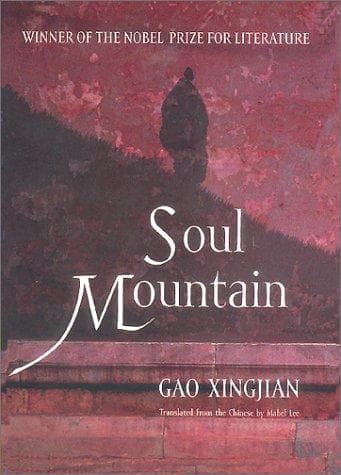
Soul Mountain
Gao Xingjian
Faced with a repressive cultural environment and the threat of internment on a prison farm, Chinese playwright, critic, novelist, and painter Gao fled Beijing and journeyed into the remote mountains and ancient forests of Sichuan. The result of this epic voyage of discovery is Soul Mountain.
Government / national · 1989
The Corpse Walker
Liao Yiwu
Liao Yiwu's 2008 oral history collects interviews with people at the margins of Chinese society — the corpse walker, the professional mourner, the leper, the former landowner, the underground church elder, the Tiananmen survivor — whose lives are systematically erased from official Chinese history. Banned in China, where Liao Yiwu remained under surveillance until his escape in 2011.
Government / national · 2008
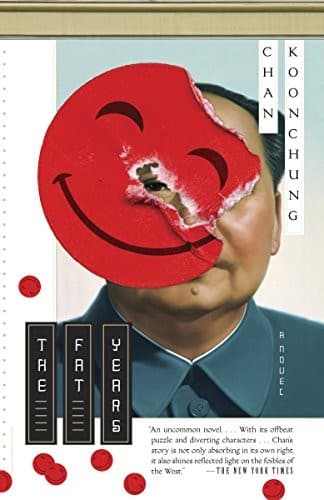
The Fat Years
Chan Koonchung
Chan Koonchung's 2009 Chinese-language dystopian novel is set in a near-future China where the population has been sedated with a drug that makes them experience inexplicable contentment during a period of history that has been erased from memory. Written in Beijing, it was published in Hong Kong and Taiwan but circulates in mainland China only as a samizdat file. Its central metaphor — the forgetting of a specific month — refers to events the author cannot name.
Government / national · 2009
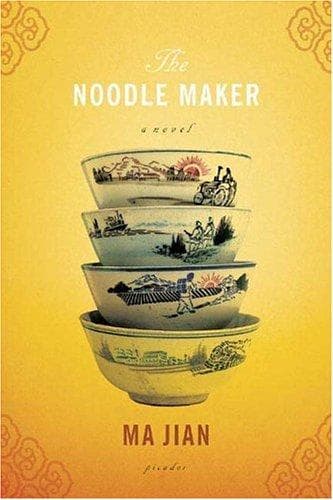
The Noodle Maker
Ma Jian
Ma Jian's 2004 novel, structured as stories within stories told by two urban wanderers in contemporary China, depicts the absurd and brutal consequences of a society that has replaced political ideology with naked commercialism. Like Beijing Coma, it was banned in China for its frank portrayal of the post-Tiananmen world in which material success has been purchased with moral vacancy.
Government / national · 1991
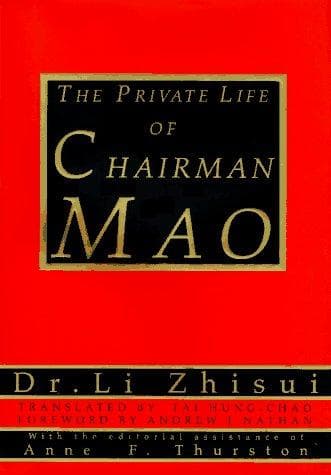
The Private Life of Chairman Mao
Li Zhisui
From 1954 until Mao Zedong's death twenty-two years later, Dr. Li Zhisui was the Chinese ruler's personal physician, which put him in almost daily - and increasingly intimate - contact with Mao and his inner circle. For most of these years, Mao's health was excellent; thus he and the doctor had time to discuss political and personal matters. Dr. Li recorded many of these conversations in his diaries as well as in his memory. In The Private Life of Chairman Mao he vividly reconstructs his extr
Government / national · 1994
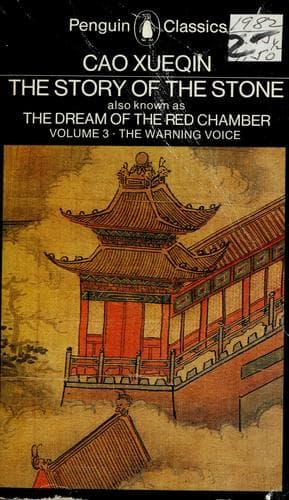
To Live
Yu Hua
Ben shu shi wo guo si da gu dian ming zhu zhi yi, yi jia bao yu, lin dai yu, xue bao chai de ai qing jiu ge wei xian suo, yi jia, shi, wang, xue si da jia zu wei zhong xin, yi qing chao feng jian she hui wei bei jing, xie chu le feng jian da jia zu de xing shuai, tong shi ye zhe she chu wo guo feng jian she hui xing shuai de li shi.
Government / national · 1994 · lifted
Tombstone
Yang Jisheng
An account of the famine that killed roughly thirty-six million Chinese during the Great Leap Forward examines how the communist ideologies and collectivization campaigns perpetuated by the country's leaders caused the catastrophe.
Government / national · 2008
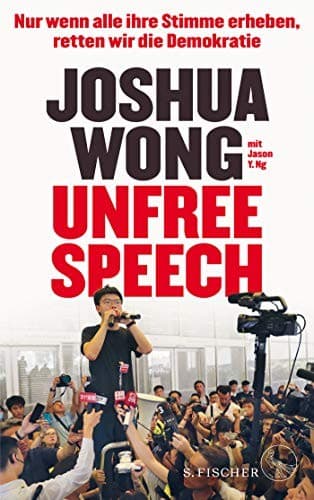
Unfree Speech
Joshua Wong
"An urgent manifesto for global democracy from Joshua Wong, the twenty-three-year-old phenomenon leading Hong Kong's protests, and Nobel Peace Prize nominee"--
Government / national · 2020
Viral: China's COVID Coverups
Murong Xuecun
Chinese author and Amnesty International prisoner of conscience Murong Xuecun (pen name of Hao Qun) travelled secretly to Wuhan in 2020 to investigate and document what was happening beyond official accounts — interviewing frontline doctors, grieving families, and survivors. The resulting book exposes the weeks of information suppression that allowed COVID-19 to spread globally before China acknowledged human-to-human transmission. Banned in China; Murong has lived under constant surveillance.
Government / national · 2021
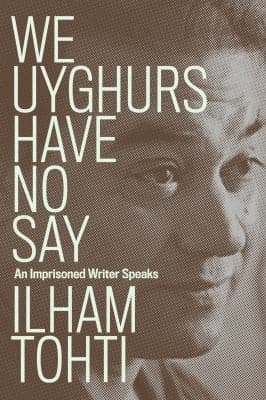
We Uyghurs Have No Say
Ilham Tohti
Rahile Dawut's writings, compiled in this 2022 volume, document the destruction of Uyghur cultural heritage in Xinjiang — the sacred sites, the oral traditions, the living memory of a people — that she had spent her career studying as an academic folklorist at Xinjiang University. Dawut was detained in 2017 and has not been heard from since; she is believed to be in one of the detention facilities the Chinese government calls "vocational training centers."
Government / national · 2014
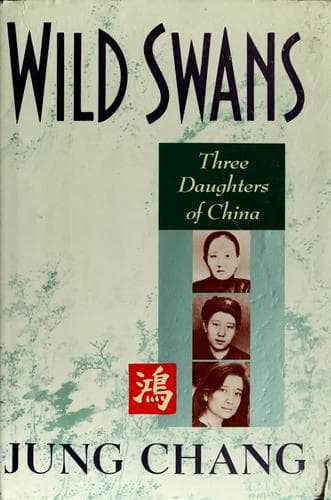
Wild Swans
Jung Chang
"Jung Chang vividly evokes China's sights, sounds, and smells to create what must be one of the grimmest, yet most perceptive accounts of growing up middle-class in the maelstrom that has swept China since the 1920s." - Back cover.
Government / national · 1991
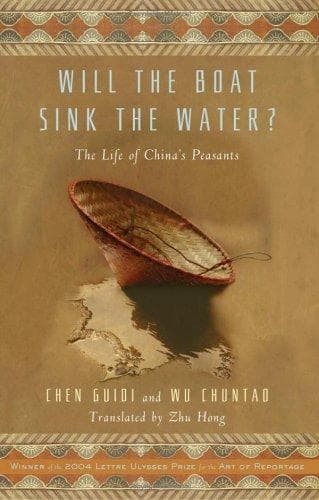
Will the Boat Sink the Water
Chen Guidi
This unique work of investigative literary journalism is translated into English for the first time. The Chinese prize-winning original sold more than 250,000 copies before it was banned and went on to sell close to ten million copies illegally in China. Subsequently, the authors have been harassed in the courts, forced to terminate their employment, and have had their home stoned by a mob - all because they dared to paint a true portrait of the life of China's peasants." "Chinese journalists Ch
Government / national · 2004 · lifted
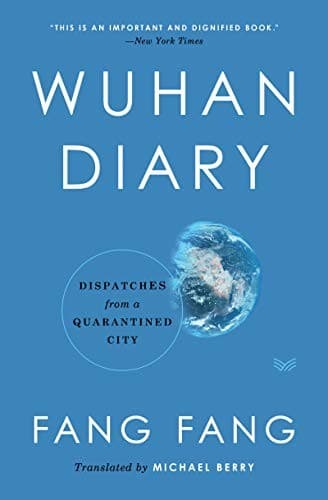
Wuhan Diary
Fang Fang
A day-by-day account of life inside locked-down Wuhan posted to Chinese social media by celebrated novelist Fang Fang during the first 76 days of China's COVID-19 lockdown in early 2020. The diary attracted millions of readers before being censored on Weibo and WeChat. Its publication in English and German translations drew fierce nationalist attacks on Fang Fang as a traitor who "handed ammunition to China's enemies" — illustrating the CCP's sensitivity about international narratives of the pandemic's origins.
Government / national · 2020
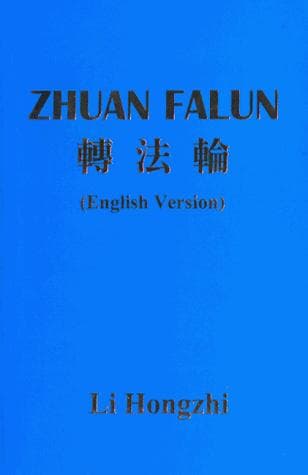
Zhuan Falun
Li Hongzhi
Handbook on how to be a true person, a good person and how to live well, solve problems with others, attain solidly good health and a clean mind. Based off one of the eight phases of Buddha's existence, known as Turning the Law Wheel.
Government / national · 1999