Alberto Moravia
1907, Italy — 1990
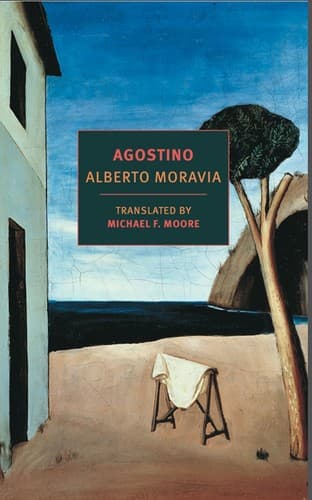
Alberto Pincherle (Italian: [alˈbɛrto ˈpiŋkerle]; 28 November 1907 – 26 September 1990), known by his pseudonym Alberto Moravia (US: moh-RAH-vee-ə, -RAY-; Italian: [moˈraːvja]), was an Italian novelist and journalist. His novels explored matters of modern sexuality, social alienation and existentialism. Moravia is best known for his debut novel Gli indifferenti (The Time of Indifference 1929) and for the anti-fascist novel Il conformista (The Conformist 1947), the basis for the film The Conformist (1970) directed by Bernardo Bertolucci. Other novels of his adapted for the cinema are Agostino, filmed with the same title by Mauro Bolognini in 1962; Il disprezzo (A Ghost at Noon or Contempt), filmed by Jean-Luc Godard as Le Mépris (Contempt 1963); La noia (Boredom), filmed with that title by Damiano Damiani in 1963 and released in the US as The Empty Canvas in 1964 and La ciociara, filmed by Vittorio De Sica as Two Women (1960). Cédric Kahn's L'Ennui (1998) is another version of La noia. Moravia once remarked that the most important facts of his life had been his illness, a tubercular infection of the bones that confined him to a bed for five years and Fascism because they both caused him to suffer and do things he otherwise would not have done. "It is what we are forced to do that forms our character, not what we do of our own free will." Moravia was an atheist. His writing was marked by its factual, cold, precise style, often depicting the malaise of the bourgeoisie. Their work has been subject to censorship or banning challenges.